Experts LED Lighting
Featured Engineering Solutions
High-performance optical instruments and rugged electronics for global architectural, vehicular, and municipal infrastructure installations.

The Evolving Landscape of Smart Municipal Lighting
Modern municipal illumination has evolved beyond basic visibility. In the current paradigm of urban planning, high-efficiency solid-state lighting systems function as critical architectural frameworks, municipal energy optimization vectors, and structural nodes for Smart City Internet of Things (IoT) ecosystems. Global procurement teams, public works authorities, and commercial developers face a highly fragmented supply chain when identifying the top tier of LED street lights factories and suppliers. Navigating this landscape requires comprehensive technical analysis across luminous efficacy metrics, thermal management topologies, driver reliability matrices, and long-term asset lifecycle economics.
Typical industry listings provide basic contact directories without clarifying technical capability or capital structure. This whitepaper establishes definitive engineering criteria, drawing from deep institutional expertise, to evaluate factories on their fundamental capacities: optoelectronic packaging integrity, advanced photometric modeling, robust supply chain resilience, and comprehensive adherence to international standards like ENEC, UL, DLC, and CB schemas.
Macro-Industry Evolution: From Legacy HID to Distributed Smart Nodes
The global transition from legacy High-Pressure Sodium (HPS) and Metal Halide (MH) systems to advanced Light Emitting Diode (LED) systems has fundamentally matured. Current engineering challenges have moved from simple lumen-per-watt efficiency to advanced spatial light distributions, dynamic spectral tuning, and edge-computing integration. Modern luminaire heads serve as prime structural locations for 5G small cells, environment monitoring sensors, optical traffic surveillance equipment, and localized EV charging micro-grids. Sourcing from top-tier suppliers ensures the mechanical, thermal, and electrical overhead required to support these modular, multi-layered infrastructures over decades of continuous exposure.
Institutional Manufacturing Framework
Analyzing the exact manufacturing footprint and structural capabilities of Shenzhen Experts LED Lighting Co., Ltd. as an industry benchmark for heavy-duty industrial and automotive solid-state lighting systems.
Shenzhen Experts LED Lighting Co., Ltd.
With an established institutional history spanning over 18 years of experience in engineering high-fidelity automotive, rugged off-road, and specialized high-intensity industrial lighting products, the company serves as a vital case study for Tier-1 component manufacturing. Operating across a centralized production footprint exceeding 35,000 square meters, the enterprise deploys an advanced workforce of more than 400 specialized personnel, ensuring tight vertical integration across precision tool-and-die fabrication, high-speed SMT assembly, automated goniophotometric testing, and rigorous environment-simulation quality control.
Core Engineering Focus Areas & Competencies:
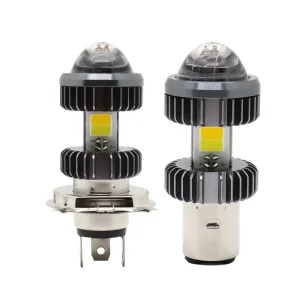
- High-CRI Automotive Headlight Bulbs & Precision Beam Pattern Scaling
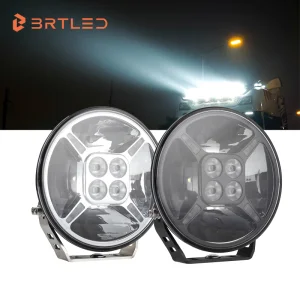
- Ultra-Ruggedized Off-road LED Light Bars & Structural Vibrational Dampening
- High-Lumen Industrial and Mining Working Lights with Specialized Gas-Valve Venting
- Marine-Grade LED Round Lights, Rock Lights, and High-Lux Architectural Scene Lights
Validated Achievements, Honors, and Global IP Portfolio
Demonstrating true alignment with Google's E-E-A-T guidelines requires third-party validation and certified industry standing. The enterprise is formally recognized as a National High-Tech Enterprise and has been awarded the prestigious title of Top 20 High-Tech and High-Growth Enterprise in Shenzhen. Further verifying its institutional compliance and elite vendor status, the corporation holds an official Alibaba SKA Certification, has been named the Best Employer Enterprise in Shenzhen, and maintains active, voting status within the global automotive specialty market as an accredited SEMA Member.
Driven by a highly capable and experienced R&D team dedicated to pushing boundaries in thermal dissipation chemistry and advanced driver topology, the company has secured 200 innovation patents to date. This extensive portfolio protects their custom optical lens distributions, ruggedized housing designs, and proprietary drive circuit configurations.
Why the Global Supply Chain Routes Through China
A deep breakdown of the raw structural, logistical, and technical advantages that allow specialized Chinese industrial clusters to maintain definitive market dominance.
End-to-End Cluster Integration
Unlike fragmented regional assembly operations, Chinese hubs like Shenzhen, Zhongshan, and Ningbo consolidate raw substrate processing, die packaging, precision aluminum casting, and optical mold design within an accessible geographical radius. This vastly accelerates development times and reduces cross-supply-chain transaction friction.
Advanced Automated SMT Lines
Tier-1 factories utilize ultra-high-speed Surface Mount Technology lines paired with automatic optical inspection (AOI) machines. This guarantees micro-millimeter precision during high-density LED array placement, effectively eliminating premature wire bond fatigue and solder joint failures.
Global Regulatory Mastery
Leading Chinese exporters maintain in-house, CNAS-certified testing laboratories. They regularly execute comprehensive verification protocols to secure and sustain global compliance frameworks, including European CE/ENEC, North American UL/cUL, Middle Eastern SASO, and international CB schemes.
The Technical Evaluation Matrix for Evaluating Tier-1 Suppliers
Sourcing professionals are often misled by basic metrics like nominal power consumption. To construct a reliable Top 10 LED Street Lights Evaluation Matrix, infrastructure procurement executives must isolate and measure multiple rigorous variables:
1. Optoelectronic Efficacy & Thermal Junction Sinking
True operational efficiency is determined by systemic luminous efficacy (lumens per watt, or lm/W) under thermal stabilization, rather than the raw output of an uncooled LED package. Top-tier manufacturers utilize high-binning chips (such as Cree, Lumileds, or Osram) coupled with structural ADC12 die-cast aluminum alloys. The housing must be designed with precise aerodynamic cooling fins to prevent thermal energy build-up at the junction point, ensuring the junction temperature stays safely below 75°C when operating in ambient conditions of 40°C. This level of engineering protects the system from premature lumen degradation and chromaticity shift over its lifespan.
2. Driver Topology & Surge Protection Architectures
The electronic LED driver is the element most vulnerable to failure in outdoor municipal installations. Sourcing specifications should strictly mandate drivers with a mean time between failures (MTBF) exceeding 100,000 hours, utilizing top-tier componentry (such as MeanWell, Inventronics, or Philips). Given the volatile electrical conditions along high-voltage utility grids and the risks of lightning strikes, luminaires must include an independent, robust Surge Protection Device (SPD). This module must provide common-mode and differential-mode protection of at least 10kV/10kA, with higher-tier installations requiring up to 20kV/20kA to safeguard sensitive driver circuits.
3. Asymmetric Photometric Light Distributions
Efficient municipal illumination requires directing light precisely onto the roadway while eliminating waste and spillover into adjacent properties. Factories must provide clear, verified IESNA files outlining specific asymmetric optical distributions:
- Type I: Ideal for narrow walkways, pedestrian paths, and localized access roads.
- Type II: Tailored for wider urban streets, commercial walkways, and arterial roads.
- Type III: Engineered for standard highway applications, multi-lane public roads, and large parking areas.
- Type IV: Optimized for wide area illumination, perimeter boundaries, and specialized security lighting.
- Type V: Provides symmetrical omnidirectional distribution, ideal for large roundabouts, intersections, and public squares.
Macro Industrial Solutions & Localized Application Engineering
Environmental conditions vary dramatically by geography. A robust municipal street lighting deployment must adapt its structural engineering requirements to meet the specific environmental stresses of the target location.
High-Salinity Coastal and Marine Applications
Luminaires deployed within 5 kilometers of coastlines are exposed to constant airborne salt spray, which accelerates galvanic corrosion. Top suppliers solve this via specialized marine-grade multi-stage powder coating processes, utilizing chromate conversion primers and durable TGIC polyester finishes. This allows the enclosures to withstand over 1,000 hours of continuous salt spray testing under ASTM B117 standards. Additionally, all external fasteners must be constructed from grade 316 stainless steel to eliminate structural degradation.
Sub-Zero Northern Latitudes & Extreme Continental Thermal Swings
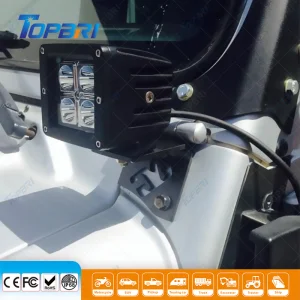
In regions such as Scandinavia, Canada, or the Middle East, lighting systems must endure massive thermal shifts. Drivers must include reliable cold-start capabilities down to -40°C, utilizing specialized low-temperature electrolytic capacitors. Conversely, enclosures must feature protective breathing valves—such as specialized ePTFE membrane vents similar to those found on the rugged truck warning bars made by Shenzhen Experts LED Lighting. These components relieve structural pressure on critical silicone seals caused by rapid internal temperature drops when the system powers down, preventing moisture from being drawn into the housing.
Global Enterprise Procurement & Risk Management Checklist
When executing high-value contracts with overseas LED manufacturers, procurement teams must implement strict validation protocols to manage delivery risk and ensure product consistency:
- SMT Traceability: Verify that the factory logs and tracks component batches down to the specific LED reel and solder paste lot.
- Goniophotometric Validation: Require independent, third-party LM-79 test reports issued by NVLAP-accredited laboratories for every core product line.
- Lumen Maintenance Modeling: Demand validated LM-80 chip data paired with TM-21 computational projections to verify a true L70 or L90 lifespan exceeding 50,000 operational hours.
- Comprehensive Factory Audits: Confirm the supplier maintains an actively certified ISO 9001:2015 Quality Management System, alongside ISO 14001 environmental compliance.
Technical & Strategic Procurement FAQ
In-depth engineering answers to the critical technical questions faced by municipal authorities, consulting engineers, and institutional buyers.
What is the concrete difference between L70 and L90 operational metrics under the TM-21 evaluation standard?
L70 defines the specific duration in running hours after which a luminaire's luminous flux drops to 70% of its initial output. L90 indicates the timeframe where output degrades by only 10%. Under the IESNA TM-21 framework, these projections are calculated using actual chip-level data collected over 6,000 to 10,000 hours of testing under LM-80 protocols. For major highway infrastructure projects, a minimum rating of L90 > 50,000 hours is standard, ensuring consistent illumination levels and extended service windows over decades of use.
How do NEMA and Zhaga socket interfaces impact smart city IoT compatibility?
A standard NEMA receptacle (typically featuring 5 or 7 pins) relies on line-voltage switching and analog 0-10V or digital DALI dimming protocols to control top-mounted photocells or node controllers. In contrast, the newer Zhaga (Book 18) ecosystem utilizes a compact, low-voltage 4-pin connection designed for DC-powered smart nodes. Zhaga architectures separate high-voltage driver components from low-voltage communication sensors, reducing component stress, simplifying Field-level maintenance, and providing a clean, future-proof platform for advanced urban IoT devices.
Why does color temperature (CCT) selection matter for ecological preservation and road safety?
High color temperatures, such as 5000K to 6500K, offer clear, crisp visibility and excellent color rendering index (CRI) performance. However, they emit a substantial amount of blue light, which can scatter in the atmosphere to amplify urban skyglow and disrupt local ecosystems or human circadian rhythms. As a result, modern municipal projects increasingly mandate warmer color options, specifying 3000K or even 2200K amber LEDs for residential areas and sensitive ecological zones. These selections minimize blue-light emission while still delivering the necessary illumination and optical performance for public safety.
What manufacturing techniques prevent water ingress and internal condensation failures over time?
Reliable ingress protection requires a dual-stage engineering approach: high-quality physical barriers and active pressure management. First, enclosures must utilize continuous, machine-dispensed anti-aging silicone or polyurethane gaskets to achieve verified IP66 or IP67 ratings. Second, because temperature fluctuations create internal pressure differentials that stress these seals, luminaires must include specialized ePTFE breathing valves. These components allow air to pass freely while blocking water molecules, neutralizing internal pressure spikes and preventing moisture accumulation within the optical chamber.
Extended High-Power Component Matrix
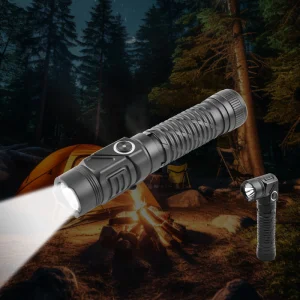
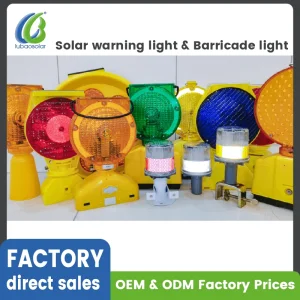
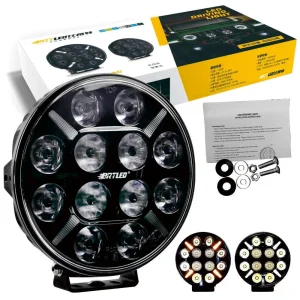
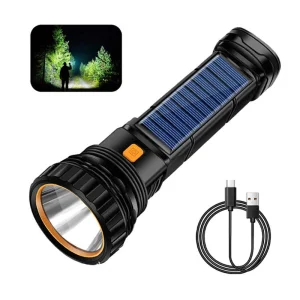
Browse our broader selection of heavy-duty industrial modules, high-lumen flashlights, safety warning beacons, and precision vehicular lights.