 Experts LED Lighting
High-Efficiency Industrial Lighting Portfolio
Explore our leading high-performance commercial and specialty LED luminaires designed for rigorous professional environments.
The Global Landscape of Industrial & Commercial LED Bay Lighting
A comprehensive analysis of energy evolution, technological advancements, and industrial demands shaping modern overhead spaces.
Modern global industrial operations are undergoing a massive transition driven by safety requirements, sustainability mandates, and efficiency targets. Industrial high-bay and low-bay lighting form the backbone of warehouses, cold storage zones, distribution hubs, and manufacturing facilities worldwide. According to recent industrial data, lighting accounts for up to 30% to 50% of a typical warehouse's total electrical footprint. Upgrading to advanced, high-performance LED structures reduces this consumption by up to 70%, especially when paired with smart control protocols.
The evolution from traditional High-Pressure Sodium (HPS) and Metal Halide (MH) systems to Solid-State Lighting (SSL) has transcended basic energy savings. Today's commercial buying agents evaluate fixtures based on spectral output, Unified Glare Rating (UGR), thermal mitigation architectures, and IoT node integrations. Crucially, the demand for custom optical solutions has surged. Facilities require targeted lighting distribution curves to direct light precisely onto vertical racking layouts while eliminating dangerous shadows in working lanes.
As regulatory mandates (such as the EU's Ecodesign ErP directives and the USA's DLC Premium Technical Requirements V5.1) raise the bar for system efficacy, only factories using state-of-the-art packaging technology and robust thermal management can satisfy strict B2B criteria.
Shenzhen Experts LED Lighting Co., Ltd.
With over 18 years of pioneering experience in high-performance automotive and industrial solid-state lighting products, Shenzhen Experts LED Lighting Co., Ltd. has established itself as an industry leader. Operating from a highly automated, state-of-the-art facility spanning more than 35,000 square meters and employing a dedicated workforce of over 400 lighting professionals, we specialize in delivering high-performance OEM/ODM solutions tailored for global markets.
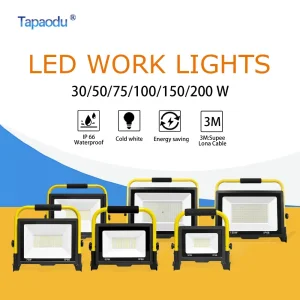
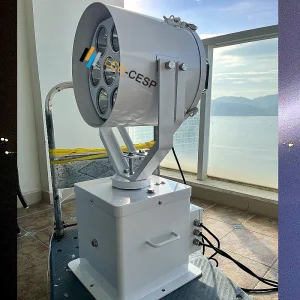
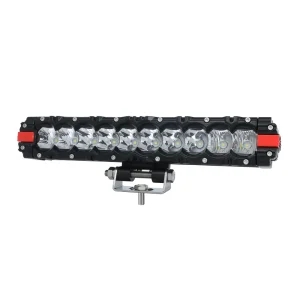
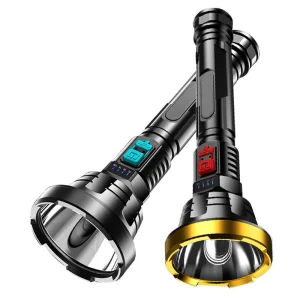
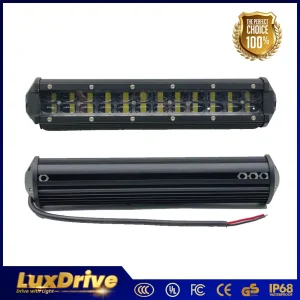
Our core product engineering lines encompass heavy-duty LED Headlight Bulbs, Off-road LED Light Bars, Industrial and Mining Working Lights, LED Round Lights, Marine Lights, Rock Lights, and high-intensity Scene Lights. Supported by an elite, in-house R&D department focused on mechanical, optical, thermal, and electrical design, we have secured over 200 innovation patents to date.
Engineering Custom Solutions for Global Brands
We provide deep customization capabilities across optical, thermal, electrical, and aesthetic configurations to match demanding project requirements.
Thermal Engineering (CFD Simulation)
High-power LED bay lights demand efficient thermal paths to maintain junction temperature below 75°C. We design our housings using die-cast aluminum alloys (ADC12) and extruded 6063-T5 aluminum profiles. This ensures long-term stability and guarantees L80B10 lifetimes exceeding 60,000 hours.
Precision Optical Customization
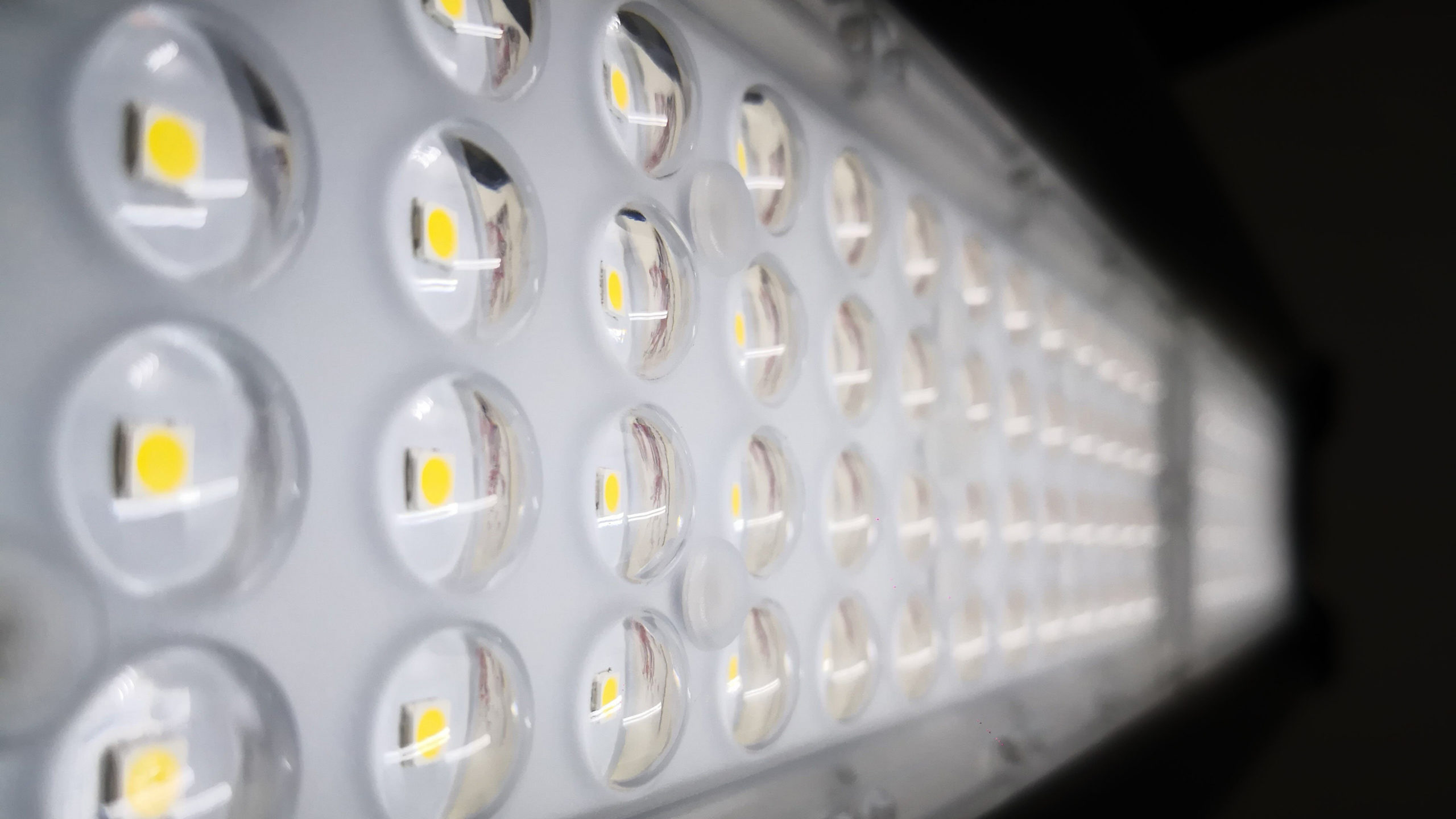
We develop high-grade PMMA and polycarbonate lenses featuring diverse light distribution patterns, including 30°, 60°, 90°, and 120° symmetric angles. Additionally, we provide custom 90°×120° polar distributions designed for warehouse aisles. These systems reduce glare (UGR < 19) and optimize light distribution.
IoT Controls & Driver Technology
We utilize tier-one power drivers (including Sosen, Inventronics, and MeanWell) configured for universal voltage ranges (100-277V, 347-480V). We support advanced dimming control protocols such as DALI-2, 1-10V, Zigbee, and Matter, as well as microwave occupancy sensors for maximum energy savings.
Localized Application Scenarios & Demands
Our industrial luminaires are engineered to withstand the harshest settings, providing reliable, high-output lighting where safety and performance are critical.
Heavy Manufacturing
Designed to withstand high vibrations, dust (IP66), and high ambient temperatures up to 55°C. Features robust housing designs to prevent the accumulation of airborne particulates.
Logistics & Racked Warehouses
Optimized with narrow beam optics designed to direct light into tall aisles. Eliminates glare for forklift operators and increases visual clarity for scanning inventory codes.
Cold Storage Facilities
Engineered to operate reliably in extreme cold (-40°C). Our thermal pathing eliminates condensation issues and maintains high luminous efficiency in sub-zero environments.
Marine & Coastal Facilities
Constructed with anti-corrosive powder coatings, 316 stainless steel components, and high IP ratings. Resists salt mist, coastal humidity, and marine environments.
Global Enterprise Procurement & Sourcing Checklist
Key metrics and validation steps that procurement agents should audit when choosing industrial lighting factories.
Decoding Industrial Quality Ratings
When sourcing LED bay lights, comparing standard specifications is not enough. You must evaluate key performance metrics to ensure long-term durability and cost-efficiency:
- ✓ System Efficacy (lm/W): Look for at least 150 lm/W at the system level, rather than just the raw LED chip's performance. High efficiency yields direct utility savings.
- ✓ Lumen Maintenance (L70/L80): Ensure the product documentation includes TM-21 projection reports based on LM-80 testing data. This guarantees lumen maintenance over the fixture's lifetime.
- ✓ Surge Protection Device (SPD): Industrial grids suffer frequent voltage fluctuations. High-quality fixtures require 6kV to 10kV built-in surge protection.
- ✓ Thermal Dissipation Safety: Opt for die-cast structures over thin sheet metal designs, which often lack the surface area required to dissipate high wattages.
Our Factory Validation Process
To guarantee peak quality on every production run, Shenzhen Experts LED Lighting operates a strict, multi-step quality assurance framework:
Incoming Component Inspection (IQC)
Spectrophotometric testing of LED chips and electrical load audits of incoming drivers.
In-Process Quality Control (IPQC)
Automated SMT placement verification, solder paste thickness monitoring, and initial electrical testing.
Final Aging & Photometrics
Every fixture undergoes a 100% full-load burn-in test for 24-48 hours, followed by goniophotometer validation.
Why Partnering with a Shenzhen LED Factory Drives Growth
Shenzhen's highly integrated supply chain ecosystem provides key advantages in speed, customization, and cost-efficiency.
1. Integrated Sourcing Infrastructure
Shenzhen acts as the global epicenter for optical components, die-casting plants, drivers, and packaging materials. This clustering reduces transportation times, lowers lead times, and allows us to rapidly adapt designs.
2. Rapid Prototyping and R&D
Equipped with in-house CNC machinery, 3D optical design systems, and thermal simulation software, our engineering team can refine custom tooling concepts and turn them into physical samples within weeks.
3. Certifications and Compliance
Our manufacturing protocols adhere to rigorous international frameworks. We maintain ISO9001 compliance and deliver products verified by UL, CE, RoHS, SAA, and SEMA certifications.
Frequently Asked Technical & Sourcing Questions
Find answers to critical queries from B2B sourcing agents, engineering firms, and distributors regarding OEM/ODM integration.
Specialty & Utility Lighting Systems
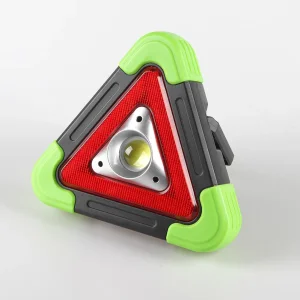
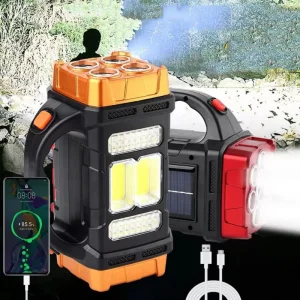
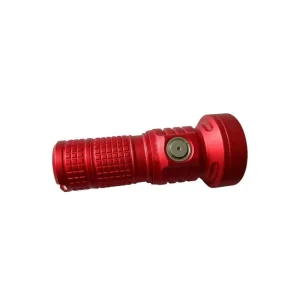
Explore our highly specialized lighting solutions built for emergency support, extreme sports, work zones, and marine operations.
Looking for Custom OEM/ODM Industrial Lighting Partnerships?
Connect with our expert engineering team to receive customized 3D photometric Dialux designs, technical specifications, and bulk pricing options.
Request Technical Consultation