Marine LED lights work in a demanding environment. Salt spray, waves, rain, and condensation can reach every exposed connection. A light may look sealed from the outside, yet moisture can enter through a cracked gasket or loose cable gland.
Why is waterproofing important for marine LED lights? Proper waterproofing protects internal circuits from water intrusion, corrosion, and electrical failure. It also supports stable brightness when the light operates on a moving vessel. In practical installations, an IP67 or IP68 rating offers useful protection, but the rating must match the application. Certification alone does not replace careful installation.
Small details matter. A damaged O-ring can create a path for seawater. Poorly tightened connectors may trap moisture. Temperature changes can also draw humid air into a housing through pressure differences. Over time, this may cause flickering, dark spots, or complete failure. The damage is often gradual.
Good marine lighting practice includes sealed housings, marine-grade cable glands, corrosion-resistant fasteners, and correctly positioned connectors. Installers should inspect seals before fitting and test the system after installation. Regular checks help identify discoloration, loose fittings, or water marks around the lens.
No waterproofing system lasts forever. That is worth remembering. Even experienced technicians can overlook a small installation defect. Product labels can also be misunderstood. Reliable performance depends on design, testing, installation quality, and maintenance working together. This article examines these factors and explains how waterproofing improves safety, durability, and value in marine LED lighting.
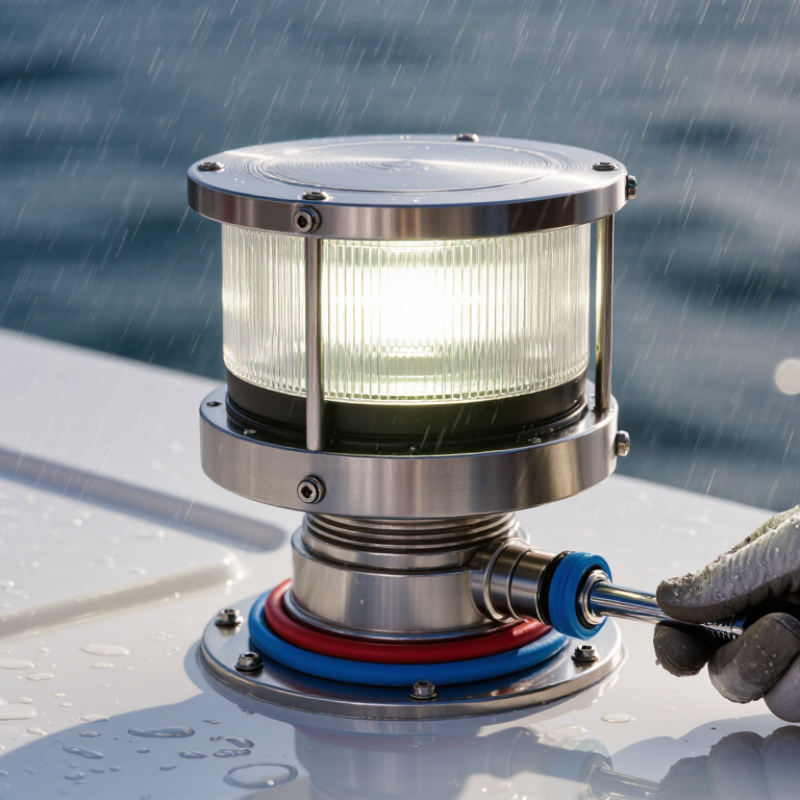
Waterproofing for marine LED lights means controlling water at every boundary, not merely adding a rubber gasket. Under IEC 60529, an IP68 rating indicates dust-tight construction and immersion protection under specified conditions. It does not guarantee unlimited depth, time, or saltwater exposure. Those limits must be stated in the test documentation.
Marine water is chemically aggressive. NOAA’s National Ocean Service reports average seawater salinity at about 35 parts per thousand. Salt can attack exposed terminals, fasteners, lens edges, and cable shields. Effective designs use sealed connectors, molded cable entries, corrosion-resistant hardware, and pressure-stable housings.
IEC 60068-2-52 provides cyclic salt-mist testing methods, but laboratory cycles cannot perfectly reproduce a marina, spray rail, or tidal installation. Real experience matters here.
Condensation deserves equal attention. A warm light switched off at night can cool quickly, drawing damp air through a weak seal. That moisture may fog the lens or corrode the driver before failure becomes visible. Installers should inspect cable bends, gland torque, mounting surfaces, and drain paths during scheduled maintenance.
Do not assume a new gasket solves an old enclosure. I have seen “waterproof” fixtures fail at the cable entry, not the lens. The label was technically correct, yet the application was poorly matched.
That is the uncomfortable lesson: waterproofing is a system of materials, testing, installation, and inspection.
Why Is Waterproofing Important for Marine LED Lights?
Water exposure can damage marine LED components long before a lamp stops working. Saltwater reaches tiny gaps around lenses, cable glands, and connectors. Once inside, it can corrode copper tracks and weaken solder joints. Moisture also creates electrical leakage, which may cause flickering, dim output, or sudden failure. Condensation is another quiet threat. Temperature changes can pull humid air into the housing, even when the outer surface looks dry.
I have seen lights fail after only a few months because water entered through a poorly tightened cable seal. The LED chips were still healthy. The driver circuit was not. Salt deposits had formed around its terminals, creating a rough white crust. Heat made the damage worse because wet components cannot release heat consistently. A sealed enclosure helps, but sealing alone is not enough. Materials, drainage design, connector protection, and installation quality must work together. I may have underestimated condensation in earlier inspections.
Tips: Choose a marine-rated housing with a verified ingress rating. Check seals for cuts, flattening, or dirt before installation. Keep cable entry points facing downward when possible. Use tinned marine cable and corrosion-resistant connectors. Do not rely on sealant as a substitute for proper compression. After installation, inspect for moisture, salt residue, loose fittings, and unusual heat. A simple inspection can reveal trouble early.
Waterproofing protects internal circuits from short circuits, corrosion, and sudden light failure. In practical inspections, small sealing problems often appear around cable entries and damaged gaskets.
The first digit measures solid-particle protection, while the second measures water resistance.
An IP66 fixture resists powerful water jets.
IP67 supports temporary immersion, usually up to one metre for 30 minutes.
IP68 allows deeper or longer immersion, but the manufacturer must state the test conditions.
That detail matters.
An IP rating applies to the tested enclosure. It may not cover field wiring, connectors, or installation errors. Saltwater can still attack exposed metal parts, even when the housing remains sealed. Standards help, but they do not replace careful maintenance.
Check the complete installation, not only the lamp housing.
Use marine-suitable cable glands and sealed connectors.
Inspect gaskets for flattening, cuts, or sand.
Rinse salt deposits with fresh water after exposure.
Keep inspection records, although many teams forget this simple step.
When choosing IP68 equipment, confirm the tested immersion depth and duration.
The rating may be misunderstood.
Marine LED lighting does more than brighten a boat, dock, or fishing area. Its waterproof construction helps maintain steady light around spray, rain, and accidental splashes. When seals fail, moisture can reach the circuit board and cause flickering, corrosion, or complete shutdown. That failure is rarely convenient. Reliable waterproofing supports safer movement, clearer visibility, and fewer maintenance interruptions.
Waterproof marine LED lighting also uses energy efficiently, which can reduce battery demand on smaller vessels. Long service life means fewer replacements in difficult-to-reach fixtures. Quality housings resist salt residue, vibration, and repeated temperature changes. An appropriate ingress protection rating gives buyers a clearer performance reference. Still, waterproof does not mean maintenance-free. Field inspections often reveal failures caused by damaged cables or loose connectors. That detail is easy to miss. Regular inspection remains essential, especially after rough weather or heavy use.
Tips: Check the stated ingress protection rating before installation. Inspect gaskets for cracks, flattening, or trapped grit. Keep connectors dry and secured above standing water when possible. Clean salt residue with fresh water and a soft cloth. Test the light before departure. Do not assume a bright fixture is fully protected. Poor installation can defeat good waterproof design.
| Technical Dimension | Verified Fact or Rating | Benefit for Marine LED Lighting | Practical Selection Check |
|---|---|---|---|
| Ingress Protection: IP65 | IP65 means the enclosure is dust-tight and protected against water jets from any direction under IEC 60529 testing conditions. | Helps protect the LED assembly from spray, rain, and routine washdown when the fixture is correctly installed. | Suitable for exposed areas with strong splashing, but it is not an immersion rating. |
| Ingress Protection: IP66 | IP66 means the enclosure is dust-tight and protected against powerful water jets under IEC 60529 testing conditions. | Provides a higher level of protection for deck lights and other locations exposed to heavy spray or aggressive cleaning. | Confirm that cable glands, connectors, and mounting points maintain the same protection level. |
| Ingress Protection: IP67 | IP67 provides dust-tight protection and temporary immersion protection in up to 1 metre of water for up to 30 minutes under IEC 60529 test conditions. | Reduces the risk of immediate water damage if a light is briefly submerged or exposed to heavy water accumulation. | Do not assume IP67 automatically means continuous underwater operation; check the manufacturer’s stated use. |
| Ingress Protection: IP68 | IP68 indicates dust-tight protection and immersion beyond IP67 levels. The exact depth and duration are specified by the product manufacturer. | Supports applications such as underwater or regularly submerged lighting when the specified depth and duration match the installation. | Verify the tested immersion depth, duration, water type, cable entry method, and installation orientation. |
| Saltwater Corrosion Resistance | An IP rating describes ingress protection, not resistance to saltwater corrosion. Housing material, coatings, fasteners, and connectors determine corrosion performance. | Helps preserve structural strength, electrical contact quality, appearance, and service life in humid and saline environments. | Look for marine-suitable materials such as 316 stainless steel or properly treated aluminum, plus sealed and corrosion-resistant connectors. |
| Sealed Cable Entry | A sealed enclosure can lose its protection if cable glands, O-rings, connectors, or unused openings are incorrectly fitted. | Prevents water from entering through the most common installation weak points. | Use compatible glands, strain relief, sealing washers, and correctly sized marine-rated cable. |
| Electrical Energy Example | A 10-watt LED operated for 8 hours per day uses approximately 29.2 kWh per year: 10 W × 8 h × 365 ÷ 1,000. | Lower power demand can reduce battery draw and generator or shore-power requirements, depending on the complete lighting system. | Compare actual wattage, operating hours, driver losses, dimming use, and the vessel’s available power system. |
| Thermal Management | Waterproofing does not eliminate heat generation. LED performance and service life depend on effective heat transfer through the housing and mounting surface. | Good thermal design helps maintain light output, color stability, and electronic reliability. | Install the fixture as specified, keep heat-sink surfaces unobstructed, and avoid enclosing it in spaces that trap heat. |
| UV and Weather Resistance | Water resistance and ultraviolet resistance are separate properties. Seals, lenses, and plastics must be suitable for prolonged outdoor exposure. | Reduces cracking, yellowing, brittleness, and seal degradation caused by sunlight and changing weather conditions. | Confirm outdoor or marine suitability for the lens, gasket, cable jacket, and housing finish. |
| Maintenance and Reliability | Moisture can cause corrosion, electrical leakage, short circuits, lens fogging, and premature component failure. | A correctly sealed and corrosion-resistant fixture can reduce unplanned replacement and maintenance work. | Inspect seals and cable entries periodically, rinse away salt deposits with fresh water when appropriate, and follow the installation instructions. |
Marine LED lights face salt spray, vibration, rain, and repeated temperature changes. Waterproofing protects circuits from short circuits and early brightness loss. NOAA reports that average seawater salinity is about 35 parts per thousand. That concentration makes exposed metal and damaged seals deteriorate quickly.
Choose lights with an appropriate IP rating under IEC 60529. IP67 protects against temporary immersion, while IP68 depends on the manufacturer’s tested depth and duration. Do not treat IP68 as unlimited underwater protection. Check the actual test conditions. Examine cable glands, O-rings, connectors, and mounting surfaces, not only the product label. A light may carry a high rating while its installation remains vulnerable.
Maintenance should include freshwater rinsing after saltwater use. Disconnect power first. Inspect seals for flattening, cracks, or sand trapped in the groove. Clean connectors with approved electrical products, then reseat them firmly. Replace damaged hardware before corrosion spreads. The NACE IMPACT study estimated global corrosion costs at 3.4% of global GDP, showing why small defects deserve attention. A practical mistake is tightening fasteners too aggressively; this can distort a gasket and create a hidden leak. Keep a simple inspection log with dates, photos, and operating hours. Five minutes of checking can reveal condensation before darkness reaches the entire fixture.
Saltwater enters tiny gaps around lenses, cable glands, and connectors. It corrodes copper tracks and weakens solder joints. The light may still appear normal. Hidden damage can grow.
Flickering, dim output, and sudden shutdown are common signs. Look for white salt residue near terminals. Unusual heat also deserves attention. Do not ignore small changes.
No. Sealing helps, but materials, drainage, connectors, and installation also matter. A poorly tightened cable seal can defeat good housing protection. Water finds weak points.
Temperature changes can pull humid air through small openings. Moisture may form inside while the outer surface stays dry. I may have underestimated this risk during earlier inspections.
Check the stated ingress rating first. Inspect gaskets for cuts, flattening, dirt, or trapped grit. Examine cable entry points and connector condition. Small defects matter.
Keep cable entries facing downward when possible. Use tinned marine cable and corrosion-resistant connectors. Keep connectors above standing water. Avoid depending on sealant alone.
Rinse salt residue with fresh water. Use a soft cloth and avoid damaging seals. Dry the fixture before testing it. Salt wins over time.
Inspect the light after rough weather or heavy use. Look for moisture, loose fittings, damaged cables, residue, and unusual heat. Test it before departure. Brightness alone proves little.
Efficient LED lighting can reduce battery demand on smaller vessels. Longer service life may also mean fewer difficult replacements. Actual savings depend on operating time and installation quality.
No. The rating offers a useful protection reference, not a permanent promise. Damaged cables, loose connectors, and poor installation can still cause failure. That distinction is easy to miss.
Why is waterproofing important for marine LED lights? Because marine environments expose lighting systems to saltwater, rain, spray, humidity, and accidental submersion. Effective waterproofing prevents water from reaching sensitive components such as circuit boards, wiring, connectors, and LEDs, reducing corrosion, short circuits, flickering, and premature failure. It also helps maintain stable brightness and reliable operation in demanding conditions.
This article explains what waterproofing means for marine LED lights and how water exposure can affect their performance and service life. It introduces common protection ratings, including IP classifications, and shows how these standards indicate resistance to dust and water. Waterproof marine LED lighting can improve safety, reduce maintenance, lower replacement costs, and provide dependable illumination. The article also offers practical guidance on selecting suitable lights by considering installation location, exposure level, sealing quality, and protection rating, along with simple maintenance practices such as checking seals, cleaning salt deposits, and inspecting cables regularly.

Experts LED Lighting