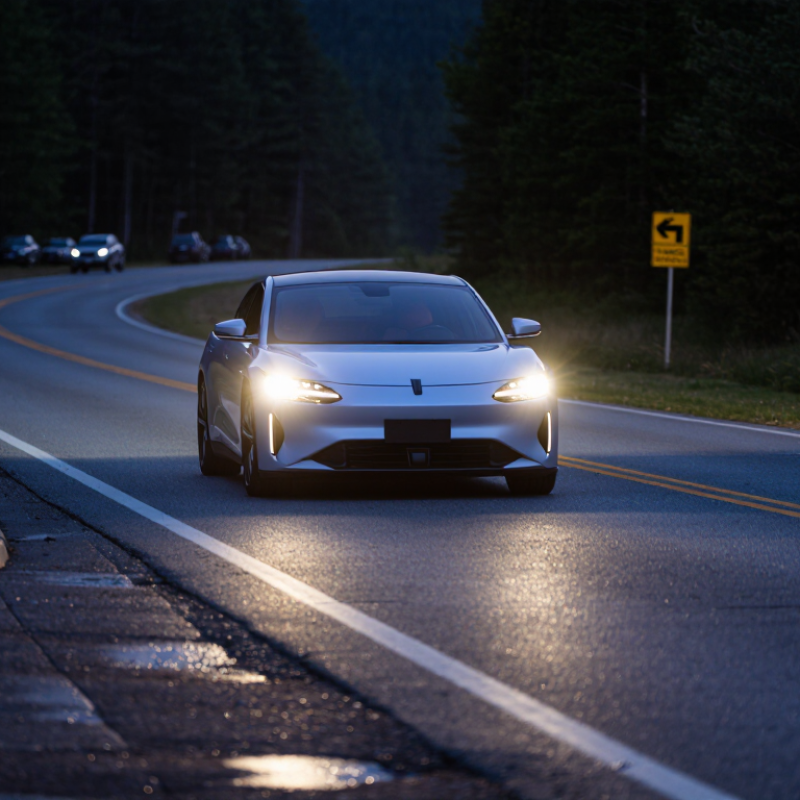
Why Are LED Headlights Safer for Night Driving?

Time:2026-10-12 Author:Aria
0%

Night driving can turn familiar roads into uncertain spaces. Dark pavement hides lane markings, pedestrians, bicycles, and unexpected debris. This is where LED technology raises an important question: How do LED headlights improve the safety of night-time driving?

Dr. John Bullough, a respected lighting researcher, explains, “Effective headlighting must improve visibility without creating disabling glare.” His point matters on real roads, not only in laboratory tests. LED headlights produce a bright, focused beam that can reveal reflective signs and road edges earlier. Their whiter light may also make objects appear more distinct against a dark background. A driver might notice a cyclist’s reflective strip, a wet patch, or an animal near the shoulder sooner.

That extra moment can change a decision.

LED systems also respond quickly and use less energy than many traditional bulbs. Adaptive versions can shape the beam around traffic, reducing unnecessary illumination toward other drivers. However, brighter does not always mean safer. Poorly aimed LEDs can create harsh glare, especially on wet roads or through mirrors. Some drivers may also misjudge distance under very intense, cool-colored light.

The safest result depends on proper installation, clean lenses, correct alignment, and responsible use of high beams. My own view is cautious: LED headlights offer valuable visibility, but they are not a substitute for slower speeds, alert attention, or regular vehicle maintenance. Safety improves when technology supports good driving habits rather than encouraging overconfidence.

Why Are LED Headlights Safer for Night Driving?

LED Headlights: How They Work at Night

Why Are LED Headlights Safer for Night Driving?

LED headlights create light through semiconductor diodes, not heated filaments. This process produces a bright, focused beam with less wasted energy. At night, that difference appears on the road. Lane markings look clearer, roadside cyclists become easier to notice, and reflective signs respond sooner. According to the U.S. Department of Energy, LED lighting can use at least 75% less energy than incandescent lighting and last up to 25 times longer. In vehicle use, lower energy demand can support stable electrical performance.

The beam pattern matters most. Modern LED systems can distribute light across the road while limiting glare toward oncoming drivers. A 2023 report from the Insurance Institute for Highway Safety found that nighttime visibility varies greatly between headlight systems, even within the same vehicle class. The National Highway Traffic Safety Administration also reports that about half of traffic fatalities occur at night, although nighttime travel represents a much smaller share of total travel. Better illumination cannot remove every risk, but it can give drivers more time to react.

The picture is not perfect. An LED headlight can still be unsafe when its beam is poorly aimed, excessively blue, or blocked by dirt. I have noticed this during wet drives: sharp light may reflect from rain and reduce contrast. Technology needs adjustment. Drivers should check alignment, clean the lens, and avoid treating brightness as proof of safety. The road still demands attention.

Why Are LED Headlights Safer for Night Driving? - LED Headlights: How They Work at Night

Key performance and safety factors affecting nighttime road visibility

Safety Dimension Typical LED Headlight Characteristics Comparison with Conventional Halogen Systems Night-Driving Relevance
Light output efficiency Approximately 80–150 lumens per watt for many automotive LED systems, depending on design and operating conditions. Common halogen systems generally produce about 15–25 lumens per watt. Higher efficiency can provide useful road illumination with less electrical power, although beam design remains critical.
Color temperature Often approximately 4,000–6,500 K, depending on the headlamp design. Typically approximately 2,700–3,500 K, producing a warmer yellow-white light. A neutral-white output can improve contrast for road markings and objects, but excessive blue content may increase glare and scatter in fog or rain.
Response time LEDs reach full brightness electronically, typically in milliseconds. Halogen bulbs require a short warm-up period because their filament must heat up. Fast activation supports rapid signaling when switching between high and low beams or using adaptive lighting functions.
Beam precision Small LED emitters can be arranged in precise optical patterns and separated into multiple lighting segments. A larger filament produces light from a less flexible point source, limiting some optical layouts. More precise control can improve forward visibility and help shape the cutoff that limits light directed toward oncoming drivers.
Adaptive lighting capability Individual LED segments can be dimmed or controlled independently in systems designed for adaptive driving beams. Traditional systems usually offer simpler all-on or all-off beam control. Segmented control may keep more of the road illuminated while reducing direct glare toward detected vehicles.
Service life Many automotive LED modules are rated for approximately 15,000–30,000 operating hours, subject to heat management and electronics. Halogen bulbs commonly last approximately 500–1,000 operating hours. Longer service life can reduce the likelihood of a failed headlight during nighttime travel and reduce replacement frequency.
Energy consumption A single LED low-beam module often uses roughly 10–30 watts, depending on the required output and thermal design. A typical halogen headlamp commonly uses approximately 55 watts per bulb. Lower electrical demand can reduce the load on the vehicle’s charging system while maintaining useful illumination.
Heat management LEDs generate less radiant heat at the lens but still require heat sinks or other thermal management at the rear of the module. Halogen filaments operate at very high temperatures and transfer substantial heat into the bulb and housing. Stable thermal control helps maintain consistent brightness and can support longer component life.
Weather performance Performance depends on lens cleanliness, beam pattern, color temperature, and the optical design of the complete lamp. Warmer halogen light may produce less short-wavelength scatter in some foggy conditions. LEDs are not automatically better in every weather condition; correct aiming and a suitable beam pattern are essential.
Glare control Precise optics can create a sharp low-beam cutoff, but poorly designed or incorrectly installed LED conversions may produce excessive glare. Original halogen optics are matched to the filament position, but aging bulbs and misalignment can also reduce beam control. The safest system is one that is properly approved, correctly installed, and aimed according to vehicle specifications.
Overall safety benefit Potentially higher visibility, faster control, longer service life, and improved integration with adaptive lighting. Proven, widely compatible technology with simpler replacement and optical requirements. LED headlights can improve nighttime driving safety when the complete lamp is well engineered, legally compliant, clean, and properly aimed.

Note: Values are representative engineering ranges rather than universal specifications. Actual performance varies by lamp design, vehicle optics, operating temperature, road conditions, and regulatory requirements.

Brighter Road Illumination and Better Visibility

On a dark road, useful light does more than make the pavement look bright. LED headlights can produce a clear, steady beam that reaches farther ahead. This extra illumination helps drivers notice lane markings, road edges, cyclists, and animals sooner. In wet weather, visible details often disappear behind reflections. A well-designed LED beam can keep light focused where the driver needs it, instead of scattering everywhere. During night drives, I have found that earlier visual cues reduce sudden braking. That feeling is practical, not just a marketing claim. Yet brightness alone is not safety. Beam pattern, color control, and correct alignment matter just as much. Too much glare can hide the very object a driver needs to see.

Human eyes need time to adjust between darkness and bright light. Consistent LED output can make that change less tiring, especially on long rural roads. The road feels more readable. Engineers evaluate illumination with measurements such as beam reach, uniformity, and glare limits. These checks matter because a bright hotspot may leave darker areas beside it. Drivers should keep lenses clean and have the headlights inspected after repairs or front-end impacts. A small angle change can send light into another driver’s eyes. I sometimes mistake brighter light for better vision, and that is an easy error. Speed, weather, fatigue, and road design still shape what can be seen. LED headlights improve the visual starting point, but they cannot remove every nighttime blind spot.

Faster Response to Hazards and Road Changes

Why Are LED Headlights Safer for Night Driving?

Faster Response to Hazards and Road Changes

LED headlights can reveal hazards sooner because they reach full brightness almost instantly. That small timing difference matters when a cyclist enters the lane unexpectedly. It also helps drivers notice brake lights, fallen branches, and changing road edges earlier. On a dark road, a clearer beam can make movement easier to judge. Every second counts.

LEDs usually produce focused, consistent illumination when properly designed and aligned. This can improve contrast between the pavement, lane markings, and nearby objects. During night driving, I have found that sharp lighting reduces the effort needed to scan bends and intersections. However, brightness alone does not guarantee safety. Poorly adjusted headlights may create glare and hide hazards for approaching drivers. That weakness deserves attention.

Road conditions can change quickly. Wet pavement reflects light, while fog scatters it and reduces visibility. A responsible driver still needs to slow down, keep the windshield clean, and watch beyond the brightest area. LED headlights support faster visual recognition, but they cannot replace judgment. I sometimes notice that bright lighting encourages overconfidence. That is a mistake worth correcting. Proper aim, suitable intensity, and regular inspection matter as much as the light source.

Reduced Glare Through Controlled Beam Design

Why Are LED Headlights Safer for Night Driving?

Reduced Glare Through Controlled Beam Design

LED headlights can improve night visibility without simply flooding the road with brightness. Their small light sources work with precise lenses and reflectors. This optical control creates a defined beam pattern. Light reaches the driving lane, while less escapes toward oncoming drivers’ eyes.

A sharp cutoff is especially useful on dark two-way roads. It keeps intense light below the sightline of approaching traffic. Drivers may notice fewer bright reflections from windshields, mirrors, and wet pavement. The road edge can still remain visible, including faded lane markings and pedestrians near the shoulder. Photometric testing measures these patterns, rather than judging safety by brightness alone.

This matters in real driving.

However, LED technology is not automatically glare-free. Incorrect installation, poor alignment, or excessive vehicle load can raise the beam. A headlight aimed only slightly high may shine directly into another driver’s mirrors. After carrying heavy cargo, I would check the beam position again. Small changes can matter.

Regular inspections support reliable performance. Clean lenses, correct aiming, and compatible optical components help preserve the intended pattern. Some adaptive systems also adjust illumination around traffic, but their response depends on sensors and road conditions. They are helpful, not infallible. Even a well-designed beam can cause discomfort in fog, rain, or sharp curves when contrast becomes difficult to judge.

Energy Efficiency, Durability, and Driving Safety

Why Are LED Headlights Safer for Night Driving?

LED headlights can improve night-driving safety through efficient, durable, and consistent illumination. They produce strong light while using less electrical power than many older lighting systems. This reduces demand on the vehicle’s charging system. The benefit is practical: brighter road edges, clearer lane markings, and less visual strain during long drives. However, brightness alone does not guarantee safety. Poorly aimed lamps can create glare and distract oncoming drivers.

Durability also matters. LEDs contain no fragile filament, so they usually tolerate vibration, frequent switching, and rough road surfaces better. Quality housings still need effective heat control, sealed connections, and moisture protection. A failed cooling fan or damaged seal can reduce performance quietly. That detail is easy to overlook. In real driving, consistent light output helps reveal pedestrians, uneven pavement, and debris sooner, especially on dark rural roads. Yet unsuitable replacements may produce scattered beams instead of useful visibility.

Tips: Keep the lenses clean and check beam alignment after installation. Replace damaged seals promptly. Compare visibility in rain, not only on dry pavement. Choose components that meet recognized safety requirements. I would also inspect color consistency, because a slightly uneven beam can become tiring over time. Small differences matter at night.

FAQS

How do LED headlights produce light?

They use semiconductor diodes instead of heated filaments. This creates a focused beam with less wasted energy.

Can LED headlights improve night-driving visibility?

They may make lane markings, road edges, cyclists, and reflective signs easier to see. Better lighting gives drivers more reaction time, not unlimited safety.

Why does beam alignment matter?

A poorly aimed beam can reduce your view and create glare for oncoming drivers. Brightness is not enough.

Are LED headlights more energy-efficient?

LED lighting can use at least 75% less energy than incandescent lighting. Lower demand may support steadier vehicle electrical performance.

Do LED headlights last longer than filament bulbs?

They usually tolerate vibration, repeated switching, and rough roads better. Some LED lighting can last up to 25 times longer, but cooling and sealing still matter.

What can reduce LED headlight performance?

Dirt, moisture, damaged seals, blocked vents, and failed cooling parts can weaken illumination. The problem may develop quietly.

Are LED headlights always better in rain?

No. Sharp or excessively blue light can reflect from wet roads and raindrops. Contrast may fall.

How should drivers check LED headlights?

Clean both lenses and inspect beam alignment after installation. Test visibility during rain, not only on dry pavement.

Can replacement LED units create safety problems?

Yes. Unsuitable components may scatter light instead of forming a useful beam. Choose parts meeting recognized safety requirements.

What is easy to overlook during inspection?

Check color consistency, seals, heat control, and roadside visibility. Small differences can cause eye strain. I still find this easy to miss.

Conclusion

LED headlights improve nighttime safety by producing a bright, focused beam that helps drivers see the road, lane markings, pedestrians, cyclists, and potential obstacles more clearly. Their advanced lighting design can provide more consistent illumination across both nearby and distant areas, allowing drivers to recognize changes in road conditions earlier. How do LED headlights improve the safety of night-time driving? They help reduce dark areas, support faster reactions to hazards, and make important visual information easier to identify in low-light conditions.

In addition, carefully controlled beam patterns can direct light where it is needed while limiting unnecessary glare for other road users. LED technology also uses energy efficiently and generally offers long-lasting performance, helping maintain dependable lighting over time. By combining stronger visibility, quicker hazard awareness, controlled brightness, and durable operation, LED headlights can create a safer and more comfortable driving experience after dark.

Aria

Aria

Aria is a dedicated marketing professional with a deep passion for innovative strategies and a keen understanding of our company's product offerings. With a wealth of experience in the industry, Aria excels at crafting engaging content that highlights the unique features and benefits of our......