How do marine LED lights compare to regular vehicle LED lights?

Time:2026-05-09 Author:Mason
0%

In the world of illumination, understanding "How do marine LED lights differ from regular vehicle LED lights?" is essential for both enthusiasts and professionals. Leading industry expert Dr. Emily Harper asserts, "Marine lights are built to endure harsher conditions, ensuring safety and reliability." This statement underscores the unique requirements found in marine environments.

Marine LED lights must withstand extreme moisture, salt, and vibrations. They are specially designed for resilience. In contrast, regular vehicle LED lights cater to different challenges, such as road conditions and varying weather patterns. This divergence leads to significant differences in design and functionality. For instance, marine lights often have enhanced waterproof ratings and corrosion-resistant materials.

Exploring these distinctions sheds light on why choosing the right type of LED light is critical for performance. While a vehicle light may suffice in conventional driving, it may not endure the rigors of marine life. This reality often influences decisions for boat owners, sailors, and marine professionals. Understanding these variations is vital for ensuring safety and efficiency in diverse environments.
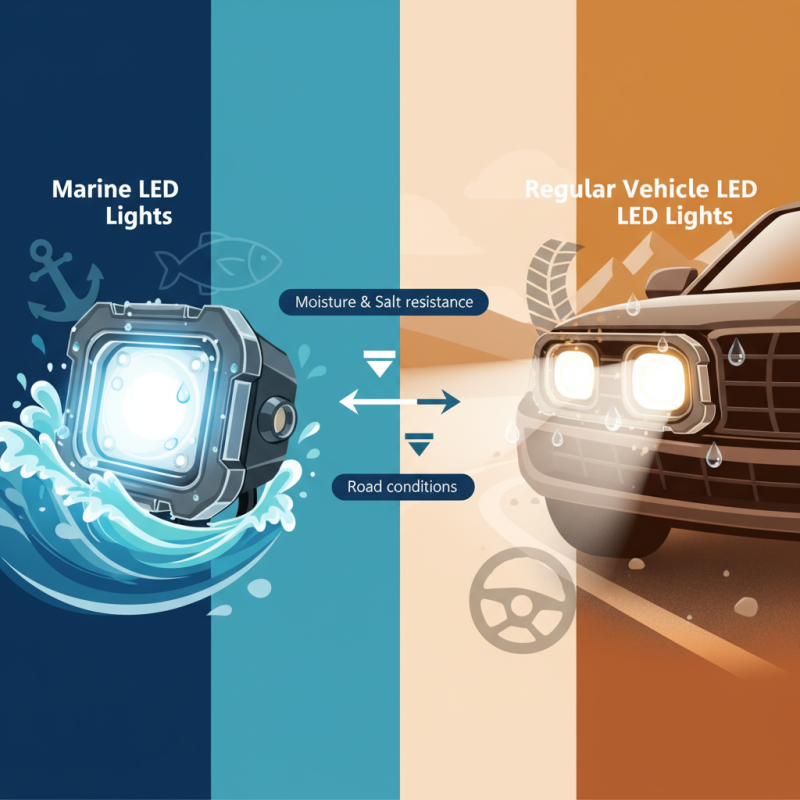
How do marine LED lights compare to regular vehicle LED lights?

Comparison of Marine LED Lights and Regular Vehicle LED Lights

Marine LED lights are specially designed to withstand harsh conditions at sea. They are often more durable than standard vehicle LED lights. Marine lights use corrosion-resistant materials and higher IP ratings, typically around IP67 or higher. This ensures they can endure water exposure and salt spray. In contrast, regular vehicle LED lights usually have lower IP ratings, making them less suitable for extreme marine environments.

The brightness and color temperature of marine LED lights may also differ. Commonly, marine lights emit a cooler light, which improves visibility in foggy or misty conditions. According to industry reports, the lumen output for marine LEDs can be significantly higher than that of regular vehicle LEDs, which typically range from 800 to 2500 lumens. This means better illumination for navigation and safety on the water.

Tips: When shopping for marine LED lights, look for ones with high lumens for better visibility. It's wise to verify the IP rating to ensure durability against water. Always check for user reviews on longevity and effectiveness in real marine scenarios. Remember, not all LED lights are created equal—choose wisely for your specific needs.

Benefits of Using Marine LED Lights in Marine Environments

Marine LED lights offer distinct advantages over regular vehicle LED lights, especially in challenging marine environments. These lights are meticulously designed to withstand harsh conditions. They typically feature robust, waterproof housings that resist corrosive saltwater. According to the Marine Electronics Association, about 60% of marine lighting failures are attributed to corrosion and water exposure. Marine LED lights mitigate this risk effectively.

The energy efficiency of marine LEDs is another significant benefit. These lights can operate with up to 85% less energy compared to traditional incandescent options. This efficiency is crucial on vessels, where power conservation is vital. Reports from the U.S. Department of Energy indicate that energy-efficient lighting can lead to annual savings of approximately $30 billion in the residential sector alone. In a marine context, it enhances battery life and reduces the need for frequent recharging.

Moreover, marine LEDs often operate at lower temperatures, minimizing the risk of overheating. This feature is particularly important when installed in small, enclosed spaces where ventilation might be poor. Despite these advantages, it’s essential to recognize the variations in quality. Not all marine LEDs are created equal, and some may not meet the rigorous standards needed for long-term reliability. A critical evaluation of specifications and user experiences is advisable before making a selection.

Comparison of Marine LED Lights vs Regular Vehicle LED Lights

Durability and Weather Resistance: A Key Difference

Marine LED lights are engineered for the harsh conditions of the ocean. Unlike regular vehicle LED lights, marine versions possess superior durability and weather resistance. They withstand saltwater exposure, UV radiation, and extreme temperatures. This durability is essential for optimal function, especially during storms.

Tips: When choosing lights for marine use, consider the IP rating. An IP65 or higher ensures water-resistant performance. Additionally, look for corrosion-resistant materials to enhance longevity.

Over time, regular vehicle LED lights can degrade due to moisture and salt. This can lead to flickering or complete failure. In contrast, marine LED lights are designed with sealed enclosures to prevent water ingress. This proactive measure minimizes potential issues. However, it's essential to regularly inspect lights for any signs of wear or damage, as salt buildup can still compromise effectiveness.

Tips: Regular cleaning can extend the lifespan of marine lights. Rinse them with fresh water after outings to remove salt and debris. Pay attention to any flickering, which may indicate an issue that needs immediate attention.

Energy Efficiency of Marine vs Regular Vehicle LED Lights

When comparing marine LED lights to regular vehicle LED lights, energy efficiency is a crucial aspect. Marine lights must withstand harsh marine environments. They are built to be more durable and efficient, as they often operate for extended periods. Regular vehicle lights may not require the same level of durability, leading to different energy consumption patterns.

Marine LED lights are designed to conserve power while providing bright illumination. They use advanced technology that ensures longevity and reduced energy waste. In contrast, vehicle LED lights might prioritize design over efficiency. This can result in higher energy consumption and shorter lifespans.

**Tips:** Always check the wattage ratings when choosing your lights. Higher wattage does not always mean better brightness. Consider using specialized marine LED lights for boats. They provide optimal performance in wet environments. Regular vehicle lights may fail quickly in these conditions.

How do marine LED lights compare to regular vehicle LED lights? - Energy Efficiency of Marine vs Regular Vehicle LED Lights

Feature Marine LED Lights Regular Vehicle LED Lights
Power Consumption 10-20 Watts 5-15 Watts
Lifespan 50,000 hours 30,000 hours
Water Resistance IP67 IP65
Light Output (Lumens) 900-1200 Lumens 800-1000 Lumens
Color Temperature 5000K - 6500K 3000K - 6000K
Durability High shock and vibration resistance Standard durability
Price Range $30 - $100 $20 - $80

Applications and Installation Differences Between the Two Types

Marine LED lights and regular vehicle LED lights serve different purposes. Marine lights are designed to withstand harsh coastal environments. They resist saltwater corrosion, humidity, and UV exposure. Regular vehicle LED lights prioritize road visibility over water resistance. This difference is crucial for safe operation.

Installation also varies significantly. Marine LED lights often require waterproof connections and specific mounting practices. They must comply with maritime safety regulations. Vehicle LED lights have a simpler installation process. They connect directly to the vehicle's electrical system. This ease contributes to rapid changes and upgrades in vehicles.

Tips: Select marine lights with an IP68 rating for complete immersion protection. For vehicle lights, ensure wiring is compatible with your specific model. Regular maintenance is key. Inspect seals and connections for any signs of wear. Each type has strengths but also unique challenges to address in efficiency and durability.

FAQS

: What are the main benefits of marine LED lights?

: Marine LED lights are designed to resist harsh conditions. They are waterproof and corrosion-resistant, ensuring durability.

How do marine LED lights compare in energy efficiency?

Marine LEDs use up to 85% less energy than traditional incandescent lights. This efficiency is crucial for saving battery power.

Can marine LED lights overheat?

Marine LEDs generally operate at lower temperatures. This reduces the risk of overheating, especially in tight spaces.

Are all marine LED lights of the same quality?

No, not all marine LEDs meet high standards. It's important to review specifications and user feedback before purchasing.

How do installation processes differ between marine and vehicle lights?

Marine lights need waterproof connections and specific mounting. Vehicle lights connect easily to the vehicle’s electrical system.

What is an important rating for marine lights?

Look for an IP68 rating for marine lights. This indicates they are protected against complete immersion in water.

What should users regularly inspect in marine lights?

Regularly check seals and connections for wear. This helps ensure long-lasting performance and reliability.

Can marine lights resist UV exposure?

Yes, marine lights are designed to resist UV exposure. This protects them from degradation due to sunlight.

How do regular vehicle lights prioritize visibility?

Vehicle LED lights focus primarily on road visibility, rather than water resistance. This is key for safe driving conditions.

What might users overlook when choosing marine LEDs?

Users sometimes overlook the variations in quality. A thorough evaluation of products can help avoid potential issues.

Conclusion

Marine LED lights and regular vehicle LED lights are designed with distinct purposes, leading to several key differences. How do marine LED lights differ from regular vehicle LED lights? Primarily, marine lights are engineered to withstand harsh marine environments, offering enhanced durability and weather resistance, which is critical for longevity. These lights are also typically more energy-efficient, providing bright illumination while consuming less power, which is essential for prolonged use on vessels.

Moreover, the applications and installation processes for marine and vehicle LED lights differ significantly. Marine lights are often meant for use on boats and other watercraft, requiring specific mounting techniques and adherence to safety standards relevant to water use. In contrast, vehicle LED lights cater to a range of automotive applications, focusing more on road visibility and compliance with vehicular regulations. Understanding these differences can help consumers make informed choices based on their specific lighting needs.

Mason

Mason

Mason is a seasoned marketing professional with a deep expertise in the company's offerings and a passion for driving brand awareness. With a strong background in digital marketing strategies, he has an innate ability to connect with diverse audiences and effectively communicate product benefits.......