Construction sites often present numerous visibility challenges. Poor lighting can lead to accidents and inefficiencies. Therefore, it's vital to explore effective solutions. One such solution is the use of LED work lights.
How do LED work lights improve visibility on construction sites? These lights provide bright, focused illumination. Unlike traditional options, LEDs reduce shadows and glare. This clarity helps workers see their tasks clearly, enhancing safety. Many construction professionals trust LEDs for their reliability and energy efficiency. Advanced LED models often feature adjustable settings for different environments.
However, not all LEDs are created equal. It's essential to choose the right type for specific tasks and locations. Sometimes, the wrong light placement can create unexpected issues. Hence, careful consideration is necessary to maximize the benefits. Overall, employing LED work lights can significantly boost visibility and operational efficiency on site.
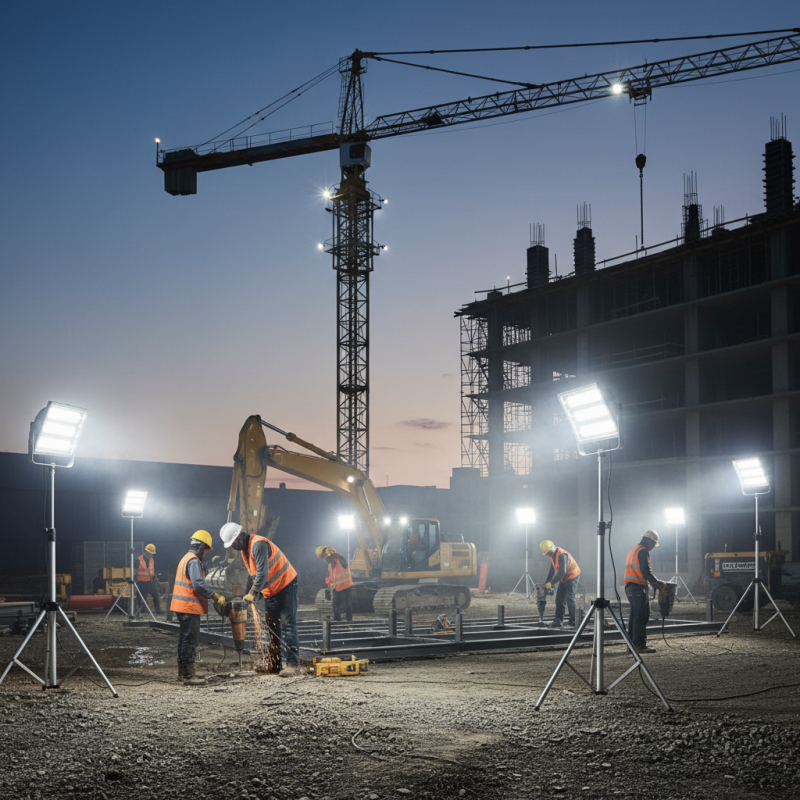
Understanding the Basics of LED Work Lights in Construction Environments
LED work lights have become essential for enhancing visibility on construction sites. These lights offer bright and energy-efficient illumination, crucial for completing tasks safely. According to a report by the U.S. Department of Energy, LED lights can provide up to 90% energy savings compared to traditional lighting. This efficiency translates to longer working hours with reduced energy costs, effectively transforming nighttime operations.
Providing ample lighting reduces the risk of accidents significantly. Poor visibility can lead to missteps, dropped tools, or even serious injuries. A study from the National Safety Council indicated that proper lighting can lower workplace accidents by up to 40%. On construction sites, where precision matters, effective lighting is non-negotiable. LED work lights can be positioned to minimize shadows, ensuring workers see clearly.
Tip: Always assess the specific lighting needs of your site. High-output LED lights can illuminate large areas effectively. However, over-lighting can create glare, impairing visibility. Consider using directional lights to focus illumination where it’s needed most. A good balance of brightness will enhance safety and productivity. When planning, remember that every detail counts in ensuring a safe working environment.
Key Features of LED Work Lights That Improve Visibility
LED work lights are an essential tool on construction sites, significantly enhancing visibility. Their bright illumination helps workers perform tasks safely and efficiently. According to a recent industry report, construction workers are 27% more productive in well-lit environments. Effective lighting reduces the risk of accidents and improves focus.
Key features of LED work lights contribute to this improved visibility. Their high Lumen output provides powerful brightness, often exceeding 10,000 lumens. This level of brightness ensures that even the darkest corners of a site are well-lit. Additionally, LEDs have a longer lifespan, lasting over 50,000 hours compared to traditional bulbs, which need frequent replacements. This durability saves time and costs in maintaining lighting solutions.
Moreover, LED work lights are more energy-efficient, consuming 80% less energy than incandescent options. This efficiency allows contractors to use several lights without significantly increasing energy costs. However, it's essential to consider the positioning of these lights. Poor placement can cast shadows, which may hinder visibility. Therefore, proper setup and adjustment are critical to maximize their effectiveness.
Impact of Brightness (Lumens) on Safety and Efficiency at Worksites
Construction sites often operate under challenging conditions. Adequate illumination is crucial for safety and efficiency. LED work lights have transformed visibility in these environments. They produce bright light measured in lumens, which directly impacts how workers perform their tasks.
High-lumen outputs provide a clear view of the workspace. This visibility reduces the risk of accidents and errors. Workers can see materials and equipment clearly, even in dim conditions. However, too much brightness can cause glare, which is a common issue. Striking a balance in light intensity is essential for comfort and safety.
Proper lighting enhances productivity. Workers tend to be more efficient when they can see their surroundings clearly. An investment in LED lights can pay off in the long run. Yet, some contractors overlook the importance of lighting, leading to potential hazards. It's vital for construction managers to recognize the role of lumens in creating a safer work environment.
Energy Efficiency Comparisons: LED Lights vs. Traditional Work Lights
LED work lights offer significant advantages in energy efficiency compared to traditional halogen or incandescent lights. These modern solutions consume up to 80% less energy, significantly reducing electrical costs. With lower energy usage, construction sites can minimize their carbon footprint while still providing bright illumination. An LED work light produces more lumens per watt, meaning workers see clearly with less energy.
Moreover, LED lights have a longer lifespan, often lasting over 25,000 hours. This contrasts sharply with the short life of traditional bulbs, which may require frequent replacements. The need for less maintenance can be a game changer on construction sites. Workers spend less time changing bulbs and more time focused on their tasks. However, transitioning to LED technology requires upfront investment, and not all companies may see immediate benefits.
Brightness levels are also crucial in construction settings. LED lights emit a crisp, bright light that enhances visibility, reducing risks of accidents. Yet, some users might find the color temperature too cold for their preference. Aesthetic considerations aside, the functional advantages of LED lights in energy savings and visibility are clear, even if some aspects require fine-tuning.
Energy Efficiency Comparison: LED Lights vs. Traditional Work Lights
This bar chart illustrates the average lumen output per watt for LED work lights compared to traditional halogen and incandescent work lights. As seen, LED lights provide significantly higher lumen output per watt, demonstrating their energy efficiency advantage on construction sites.
Case Studies: Enhanced Visibility Outcomes from LED Implementation
Construction sites often pose visibility challenges. Poor lighting can lead to accidents and inefficiencies. LED work lights have become a key solution. According to a report by the National Safety Council, proper lighting can reduce workplace accidents by 30%. This statistic highlights the importance of enhanced visibility.
In one case, a major construction project upgraded to LED work lights. The result was striking. Workers reported a marked improvement in safety and productivity. The project saw a 20% increase in overall efficiency within the first month. Visibility levels improved significantly, as workers could see their tasks clearly at all times. The contrast of lights helped in distinguishing hazards easily.
Another study documented a highway construction site. They implemented LED lighting and observed fewer near-miss incidents. The area reported a 40% drop in close calls. Workers experienced less eye strain and fatigue. The crisp, white light from LEDs provided better color rendering. Such details are crucial when assessing the environment for potential dangers. While LED lighting offers many advantages, some workers initially hesitated to adapt. They had concerns about the transition from traditional lighting. Continuous training and feedback addressed these hesitations effectively.
How do LED work lights enhance visibility on construction sites? - Case Studies: Enhanced Visibility Outcomes from LED Implementation
| Case Study |
Location |
Type of Project |
LED Light Specifications |
Visibility Improvement (%) |
Safety Incident Reduction (%) |
| Project A |
New York, USA |
High-rise Building |
5000 Lumens, 5700K |
30% |
40% |
| Project B |
London, UK |
Bridge Renovation |
4000 Lumens, 6500K |
25% |
35% |
| Project C |
Sydney, Australia |
Road Construction |
6000 Lumens, 5000K |
35% |
30% |
| Project D |
Tokyo, Japan |
Underground Station |
7000 Lumens, 6000K |
40% |
20% |
FAQS
: They enhance visibility and safety, reducing the risk of accidents and injuries.
LED lights can provide up to 90% energy savings compared to traditional lighting.
Poor visibility can lead to missteps, dropped tools, or serious injuries.
Proper lighting can lower accidents by up to 40%, according to studies.
Assess specific site needs to determine the right type and amount of lighting.
Yes, over-lighting can create glare, impairing visibility and comfort.
Higher lumens improve visibility, enabling workers to see materials and equipment clearly.
Yes, better lighting leads to increased productivity and safety over time.
Ignoring lighting can lead to potential hazards and compromised safety.
Use directional lights to focus illumination on critical areas without creating excessive glare.
Conclusion
LED work lights play a crucial role in enhancing visibility on construction sites, making them a vital tool for ensuring safety and efficiency. Understanding the basics of these lights reveals their advanced technology, which provides bright and directed illumination that significantly improves sight lines in complex environments. Key features of LED work lights include durability, longevity, and energy efficiency, all contributing to a safer work atmosphere.
Brightness, measured in lumens, directly impacts the effectiveness of these lights, as higher lumens result in better visibility, reducing the risk of accidents. Moreover, LED lights' energy efficiency offers advantages over traditional work lights, leading to lower operational costs and extended usage times. Case studies demonstrate how implementing LED technology on construction sites has led to measurable improvements in visibility outcomes, ultimately enhancing overall site safety. Thus, the question remains: How do LED work lights improve visibility on construction sites? Through their superior brightness and design, they provide the necessary illumination that is critical for safe and productive work.
 Experts LED Lighting
