Choosing interior LED lights is not simply a matter of brightness or color. A blue strip may look striking in a showroom, yet feel harsh on a dark road.
So, What factors to consider when buying LED lights for your vehicle's interior? Start with visual comfort, heat, installation quality, and electrical compatibility. The U.S. Department of Energy’s Solid-State Lighting R&D Opportunities report identifies efficiency, color quality, thermal management, and control systems as continuing lighting priorities. These concerns matter inside a small cabin, where glare can reflect from glass, chrome, and glossy dashboard panels.
John Bullough, Ph.D., a lighting researcher at the Lighting Research Center, offers a practical principle: “Light levels should be appropriate for the visual task and the surrounding environment.” His point is easy to apply. Reading a map needs more light than creating a soft footwell glow. The National Highway Traffic Safety Administration also warns that visual-manual distractions can reduce attention during driving. Interior lighting should therefore remain adjustable, indirect, and easy to control.
Look for dimming, stable color temperature, low heat, and secure wiring. A quality LED should illuminate door pockets without shining directly into the driver’s eyes. Check voltage compatibility before installation. Cheap kits often advertise vivid colors, but omit reliable thermal protection or clear specifications. That is a weakness worth admitting. There is no perfect light for every vehicle, driver, or night journey. The best choice balances atmosphere with restraint, comfort with visibility, and style with dependable performance.
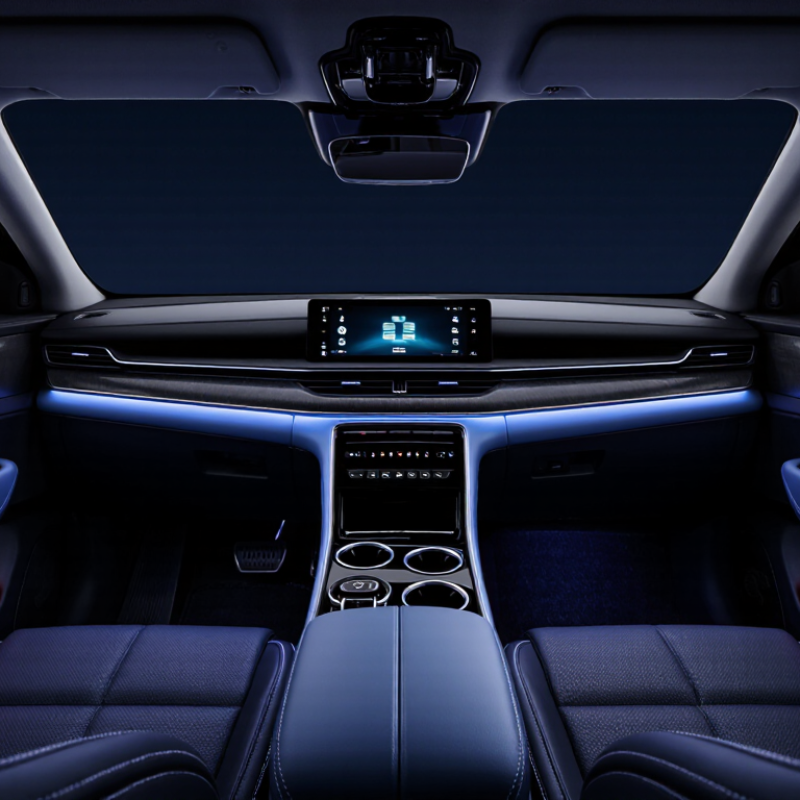
Define Your Vehicle’s Interior Lighting Needs
Define your vehicle’s interior lighting needs before comparing LED specifications. List the moments that matter: finding a dropped phone, reading a map, checking a child’s seat, or loading bags at night. Each task needs different brightness and beam coverage. A soft footwell glow may suit daily driving, while a stronger dome light helps with inspections. More brightness is not automatically better.
NHTSA’s 2023 Traffic Safety Facts recorded 3,275 deaths in distraction-affected crashes. Interior lighting should support quick actions, not pull your eyes away from the road. Select LEDs with smooth dimming, low glare, and door-triggered activation. Neutral white light, around 3,500–4,500K, often reveals cabin details without feeling harsh. However, personal sensitivity varies. Test the light after dark.
The U.S. Department of Energy reports that LEDs can use at least 75% less energy and last up to 25 times longer than incandescent lamps. That advantage matters in a vehicle with frequent short trips. Still, compatibility deserves attention. Check the socket type, polarity, heat clearance, flicker, and electrical load. Some replacements create warning messages or stay faintly illuminated after shutdown. I once assumed a brighter panel light would improve visibility; it mainly reflected across the windshield. Measure the actual cabin, sit in every seating position, and judge the result from the driver’s normal viewpoint.
Check LED Bulb Compatibility and Available Power
Choosing interior LED lighting starts with the socket, not brightness. In practical installation checks, a bulb can fit loosely yet fail electrically. Identify the original bulb’s base, length, width, and contact style. Common forms include wedge and festoon sockets, but appearances can mislead. Measure the old bulb with a ruler. Compare those measurements with the replacement’s specifications. Check polarity too. Some LEDs work only in one direction. If the lamp stays dark, switch off power and reverse the bulb carefully.
Available power matters just as much as physical fit. Vehicle interior circuits commonly operate near 12 volts, while charging voltage can rise above 13 volts. Select a bulb rated for the vehicle’s stated system voltage. Do not assume a lower wattage solves every problem. Some cars monitor lighting circuits electronically. That mismatch may cause flicker, warnings, or delayed shutoff. Check the bulb’s current draw against the circuit information in the service manual. A load resistor can change the circuit response, but it creates heat. That solution deserves careful technical review.
Inspect the fuse rating, socket condition, and nearby plastic before installation. Scorch marks, loose contacts, or melted housings signal a deeper fault. Never install a larger fuse to stop repeated failures. Use a multimeter when voltage seems uncertain. Test the light with doors open, doors closed, and the dimming function active. Brightness is not enough. I have sometimes preferred a slightly less powerful bulb after noticing glare and excess heat. That choice felt imperfect, but safer.
Compare Brightness, Color Temperature, and Light Distribution
How to Choose the Best Interior LED Lights for Your Vehicle
Interior LED lighting should make the cabin clearer, not turn it into a harsh showroom. Compare brightness, color temperature, and light distribution before buying. Brightness is measured in lumens, but higher output is not always better. Excessive light can reflect across the windshield and distract the driver at night. I once installed an overly bright lamp above the center console. It looked impressive, yet it created an irritating glare on nearby surfaces.
Color temperature changes the cabin’s mood and visual comfort. Warm white light, around 2700K to 3500K, feels softer and works well for relaxed evening use. Neutral white, near 4000K to 5000K, usually reveals maps, controls, and small objects more accurately. Very cool light may look modern, but it can feel sharp after long drives. I initially preferred the coolest setting, then found it tiring during extended trips.
Tips: Check the beam pattern, not only the lumen rating. A wide, even spread helps prevent dark corners. Narrow beams can create bright spots and shadows. Test the light while seated in the driver’s position. Look for reflections on the windows, dashboard, and mirrors. A dimmer is useful, although some fittings may flicker at low settings. Also, confirm the socket type and available space before installation. Small details matter.
How to Choose the Best Interior LED Lights for Your Vehicle - Compare Brightness, Color Temperature, and Light Distribution
Use the following comparison to match LED interior lighting specifications with common vehicle applications. Actual results may vary with lens design, installation position, vehicle trim, and electrical system condition.
| Lighting Profile |
Typical Brightness |
Color Temperature |
Color Rendering |
Typical Beam Angle |
Light Distribution |
Suitable Vehicle Area |
Approx. Power |
| Low-glare ambient |
20–60 lm |
2,700–3,000 K
Warm white |
CRI 80+ |
100–140° |
Wide, soft, and indirect illumination with low contrast. |
Door pockets, footwells, dashboard accents, and center-console trim. |
0.3–1.0 W |
| Balanced general lighting |
80–180 lm |
3,500–4,500 K
Neutral white |
CRI 80–90 |
90–120° |
Even coverage with moderate intensity and limited hotspot formation. |
Front dome lamps, rear cabin lamps, and passenger reading areas. |
1.0–2.5 W |
| Bright task lighting |
180–350 lm |
4,000–5,000 K
Neutral to cool white |
CRI 80+ |
60–100° |
Focused output that improves visibility on a specific surface. |
Map lights, cargo areas, glove compartments, and vehicle entry zones. |
2.0–4.0 W |
| High-output utility |
350–600 lm |
4,500–6,500 K
Cool white |
CRI 70–85 |
45–90° |
Strong, directional illumination with a higher risk of glare. |
Large cargo compartments, vans, service vehicles, and rear hatch areas. |
4.0–7.0 W |
| Reading-focused |
100–250 lm |
3,000–4,000 K
Warm to neutral white |
CRI 90+ |
30–70° |
Narrow, controlled beam designed to illuminate a book or small work area. |
Passenger reading lamps and rear-seat individual lights. |
1.0–3.0 W |
| Color-accurate inspection |
250–450 lm |
4,000–5,000 K
Neutral white |
CRI 90+ |
60–100° |
Uniform output with reduced color distortion when inspecting objects. |
Detailing work, maintenance checks, and accessible storage spaces. |
3.0–5.0 W |
Selection tip: Choose a wider beam angle for even cabin coverage and a narrower beam angle for reading or task lighting. For normal passenger comfort, neutral white light around 3,500–4,500 K is a practical compromise; very cool light above 5,000 K can appear harsher and create more visible glare.
Evaluate Installation Methods, Features, and Safety
How to Choose the Best Interior LED Lights for Your Vehicle
Installation method should match your vehicle and your confidence level. Plug-in lights are simple, removable, and useful for temporary upgrades. Hardwired units look cleaner, but they require careful fuse selection and secure connections. Never route wires across pedals, seat rails, or airbag paths. I prefer plastic trim tools and insulated connectors because metal tools can scratch panels or cause accidental contact.
Features matter after installation. Look for adjustable brightness, low-power operation, and a memory function that restores your preferred setting. Warm white light can feel calmer, while neutral white improves visibility without appearing harsh. Adhesive strips should have strong backing, but clips are safer on textured surfaces. Test the light before hiding the wiring. I once placed a strip too close to a door seal; it peeled away within days.
Safety deserves more attention than appearance. Check polarity, protect exposed connections, and keep lights away from heat sources. Use an appropriate fuse when connecting to the vehicle’s electrical system. Moisture-resistant housings help near footwells, but no interior light should be treated as waterproof. Avoid excessive brightness, especially while driving at night. Local regulations may also limit certain colors or flashing functions. My own setup looked impressive at first, yet the glare reflected in the side window. A dimmer setting worked better. Sometimes less light is the safer choice.
Select Durable LEDs Within Your Budget
How to Choose the Best Interior LED Lights for Your Vehicle
Select Durable LEDs Within Your Budget
A low price can be tempting, but durability usually saves money over time. Check the bulb’s voltage, socket type, and stated operating temperature before buying. The light must match your vehicle’s electrical system. Otherwise, flickering or early failure may follow.
Look for LEDs with solid housings, secure contacts, and clear electrical specifications. A higher lumen rating does not always mean better interior lighting. Excessive brightness can create glare on windows and mirrors. For reading areas, neutral white light often feels comfortable. Warmer light may suit footwells and door panels. Small details matter.
I once chose the cheapest bulbs for a compact car. They looked bright in the package, yet several became loose after repeated driving. That was a mistake. Now, I check heat management and connection quality first. I also compare the warranty with the total cost, including replacement time. A slightly more expensive set may be worthwhile if it lasts longer.
Before installation, turn off the vehicle’s power and confirm the original bulb’s orientation. Some LEDs are polarity-sensitive and will not illuminate when reversed. Test one bulb before replacing the entire set. Keep the original bulbs in a labeled container. This simple habit helps if the new lights disappoint or fail. Check the vehicle manual, too. Interior lighting circuits differ more than many buyers expect.
How to Choose the Best Interior LED Lights for Your Vehicle
This comparison uses typical specifications for common vehicle interior bulb types. LEDs generally use less power and last much longer than incandescent or halogen bulbs, while standard LEDs usually offer the best balance between durability and budget. Actual performance depends on bulb quality, heat management, fitment, and vehicle compatibility.
FAQS
List real tasks, such as finding a phone, reading a map, or checking a child’s seat. A soft footwell glow may suit daily driving. A stronger dome light helps with nighttime inspections.
No. Excessive brightness can create glare across the windshield or side window. Choose smooth dimming and low glare instead. More light is not always safer.
Neutral white light around 3,500–4,500K often shows cabin details clearly. Warm white may feel calmer during ordinary driving. Test the light after dark.
Compare the original bulb’s base, length, width, and contact style. Measure it with a ruler. Common sockets include wedge and festoon types, but similar shapes can mislead.
Turn off power and reverse the bulb carefully. Some LEDs work only in one direction. If it still fails, inspect the socket, contacts, and fuse.
Vehicle circuits may operate near 12 volts and exceed 13 volts while charging. Check voltage ratings, current draw, flicker, and delayed shutoff behavior. A lower wattage does not fix every mismatch.
Plug-in lights are removable and usually need less wiring. Hardwired units look cleaner but require secure connections and correct fuse protection. Keep wires away from pedals, seat rails, and airbag paths.
Test it with doors open, doors closed, and dimming active. Check every seating position from the driver’s viewpoint. I once installed a strip near a door seal. It peeled away within days.
Conclusion
Choosing the best interior LED lights for your vehicle begins with understanding your specific lighting needs. Consider whether you want subtle ambient illumination, brighter visibility for reading, or focused lighting for storage areas. Before purchasing, confirm the bulb size, socket type, voltage, and available power in your vehicle to ensure compatibility. What factors to consider when buying LED lights for your vehicle's interior? Key points include brightness, color temperature, and light distribution, since these affect comfort, visibility, and the overall atmosphere inside the cabin.
You should also evaluate the installation method, choosing lights that can be fitted securely without damaging interior panels or electrical components. Useful features may include adjustable brightness, multiple color options, or low-power operation, while safety should remain a priority. Finally, select durable LEDs made with reliable materials and heat-resistant construction. Comparing lifespan, performance, ease of installation, and price will help you find an option that fits your budget while providing consistent, comfortable interior lighting.
 Experts LED Lighting
