 Experts LED Lighting
How to Choose the Best Professional Series Light Bars?
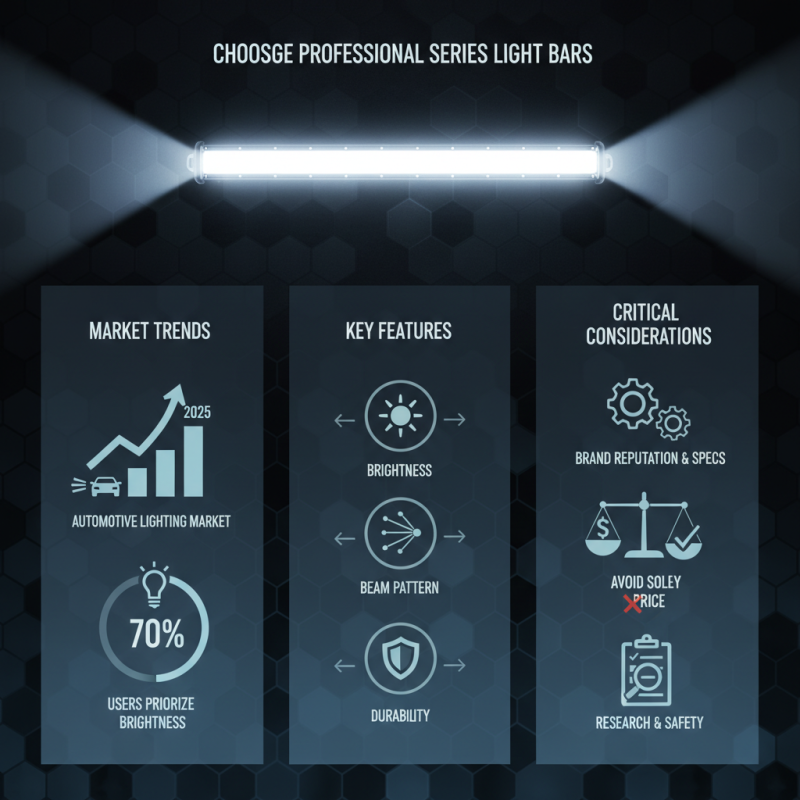
Choosing the right Professional Series Light Bars can be daunting. The variety of options available can overwhelm consumers. According to the automotive lighting market report, the global light bars market is expected to grow significantly through 2025, highlighting increased demand.
When selecting Professional Series Light Bars, important factors must be considered. Brightness, beam pattern, and durability are key features. The illumination provided by light bars impacts nighttime visibility and safety. Interestingly, a survey revealed that 70% of users prioritize brightness above all else. This statistic suggests that consumers understand the significance of a powerful light source.
Purchasing Professional Series Light Bars is not just about aesthetics. It reflects a commitment to safety and performance. Users should consider both brand reputation and technical specifications. A common mistake is focusing solely on price, which can lead to subpar performance. This critical choice deserves thoughtful consideration and research.
Understanding the Different Types of Professional Series Light Bars
Choosing the right professional series light bars requires understanding the various types available. Light bars can be categorized mainly into LED, HID, and Halogen variants. LED light bars are popular due to their energy efficiency and longer lifespan. According to a recent industry report, LEDs can last up to 50,000 hours, compared to just 2,000 hours for Halogen lights.
HID light bars, known for their brightness, produce a high-intensity discharge and are often preferred for off-road vehicles. However, they require more power and can have warm-up times. Each type has its pros and cons, making it essential to assess your specific needs before making a decision.
Tip: Consider what activities you will use the light bars for. If you need lights for long-distance visibility during night drives, LED bars are your best bet.
Another essential factor is beam pattern. Flood beams provide a wide light distribution, ideal for close-range visibility. On the other hand, spot beams focus light into a narrow area, perfect for long distances. A blend of both can offer versatility.
Tip: Test lights in person if possible. Pay attention to light quality and intensity. You may find some options do not meet your expectations, emphasizing the need for thorough research.
How to Choose the Best Professional Series Light Bars? - Understanding the Different Types of Professional Series Light Bars
| Light Bar Type | Brightness (Lumens) | Wattage | Length (Inches) | Color Temperature (K) | Beam Pattern |
|---|---|---|---|---|---|
| Flood Light Bar | 10,000 | 100 | 20 | 5000 | Wide |
| Spot Light Bar | 12,000 | 120 | 24 | 6000 | Narrow |
| Combo Light Bar | 15,000 | 150 | 30 | 5500 | Wide & Narrow |
| LED Work Light Bar | 8,000 | 80 | 18 | 3000 | Flood |
| Off-Road Light Bar | 20,000 | 200 | 36 | 5000 | Combo |
FAQS
: Durability is largely affected by materials, environmental resistance, and impact ratings.
Aluminum housings are strong and corrosion-resistant, while plastic components may not last in harsh conditions.
The IK rating measures a light bar's impact resistance, with higher ratings indicating better durability against hits.
Inadequate environmental protection leads to a significant percentage of light bar failures, impacting reliability.
Consider mounting styles like surface or gutter mounts. Each has unique pros and cons for installation.
Ineffective mounting can result in poor alignment, leading to inadequate illumination and safety risks.
About 25% of installation failures arise from inadequate mounting. It’s vital for ensuring efficiency and safety.
Consider terrain and weight distribution for successful installation. Neglecting these factors can lead to challenges.
Awareness of durability features ensures better investments; ignoring them may lead to poor long-term performance.
Focus on mounting systems and installation details. They can greatly enhance effectiveness and safety.
Conclusion
When selecting the best Professional Series Light Bars, it's essential to understand the different types available on the market. Each type offers unique benefits tailored to various applications, from off-road adventures to professional use. Key factors to consider include brightness and light output specifications, which determine the performance of the light bar in various environments.
Additionally, assessing the durability and environmental resistance features ensures the light bars can withstand harsh conditions. Finally, comparing mounting options and installation requirements will aid in choosing the best fit for your specific needs. By considering these elements, you can make an informed decision and select Professional Series Light Bars that meet your requirements effectively.
